You’ve got the tickets, the itinerary is set, and the outfits are planned. The only question left is: how are you going to capture it all?
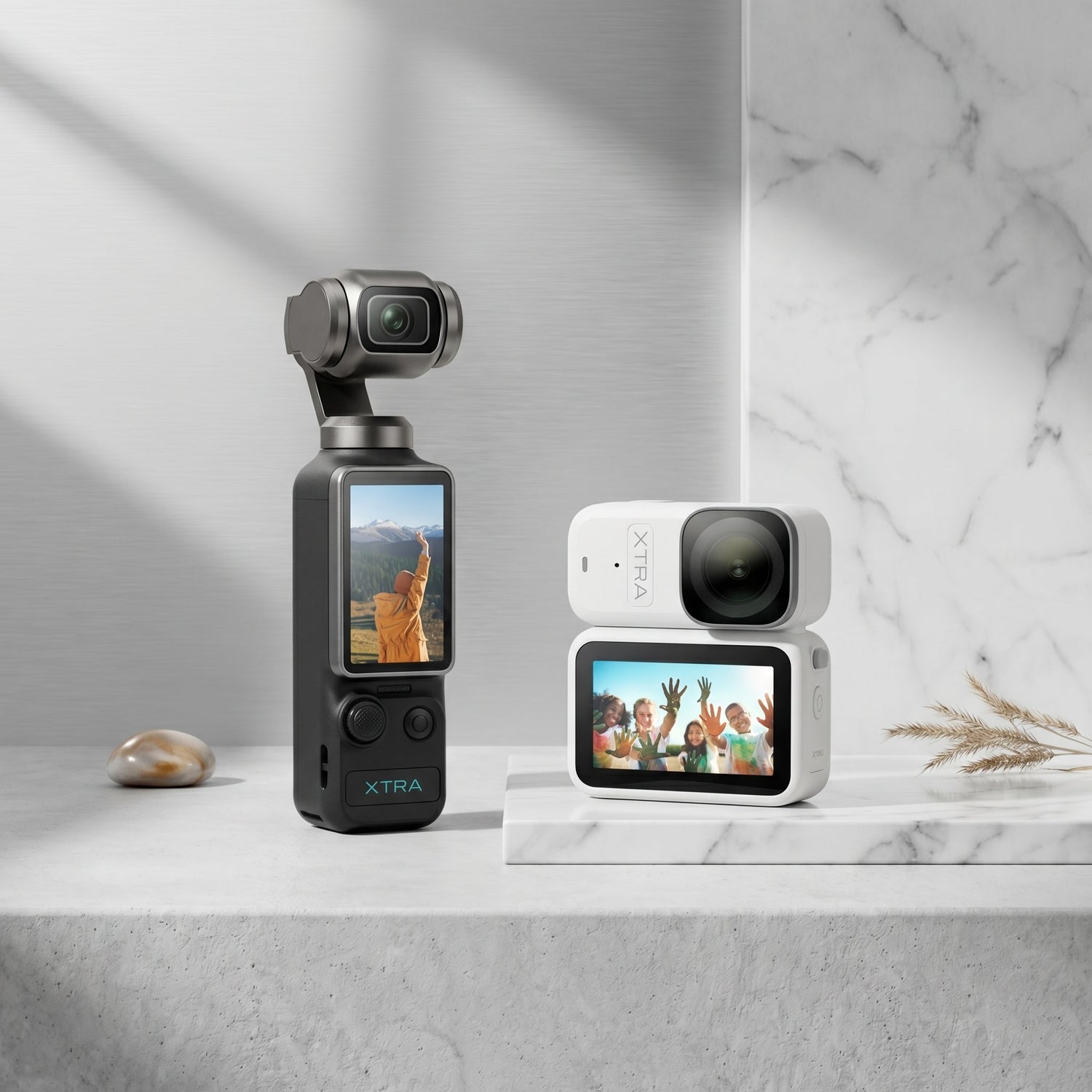
As creators look to upgrade their setups beyond their smartphones, two standout options have emerged as the ultimate travel and festival companions. But when it comes to the xtra muse vs xtra atto, which one is right for you?
Both cameras are compact, powerful, and designed to capture your life flawlessly. However, they are built for entirely different shooting styles. Let’s break down which camera deserves a spot in your bag for your next weekend getaway.
XTRA ATTO: The Hands-Free POV Powerhouse
Best for: Immersive action, carefree festival dancing, and rugged outdoor adventures.
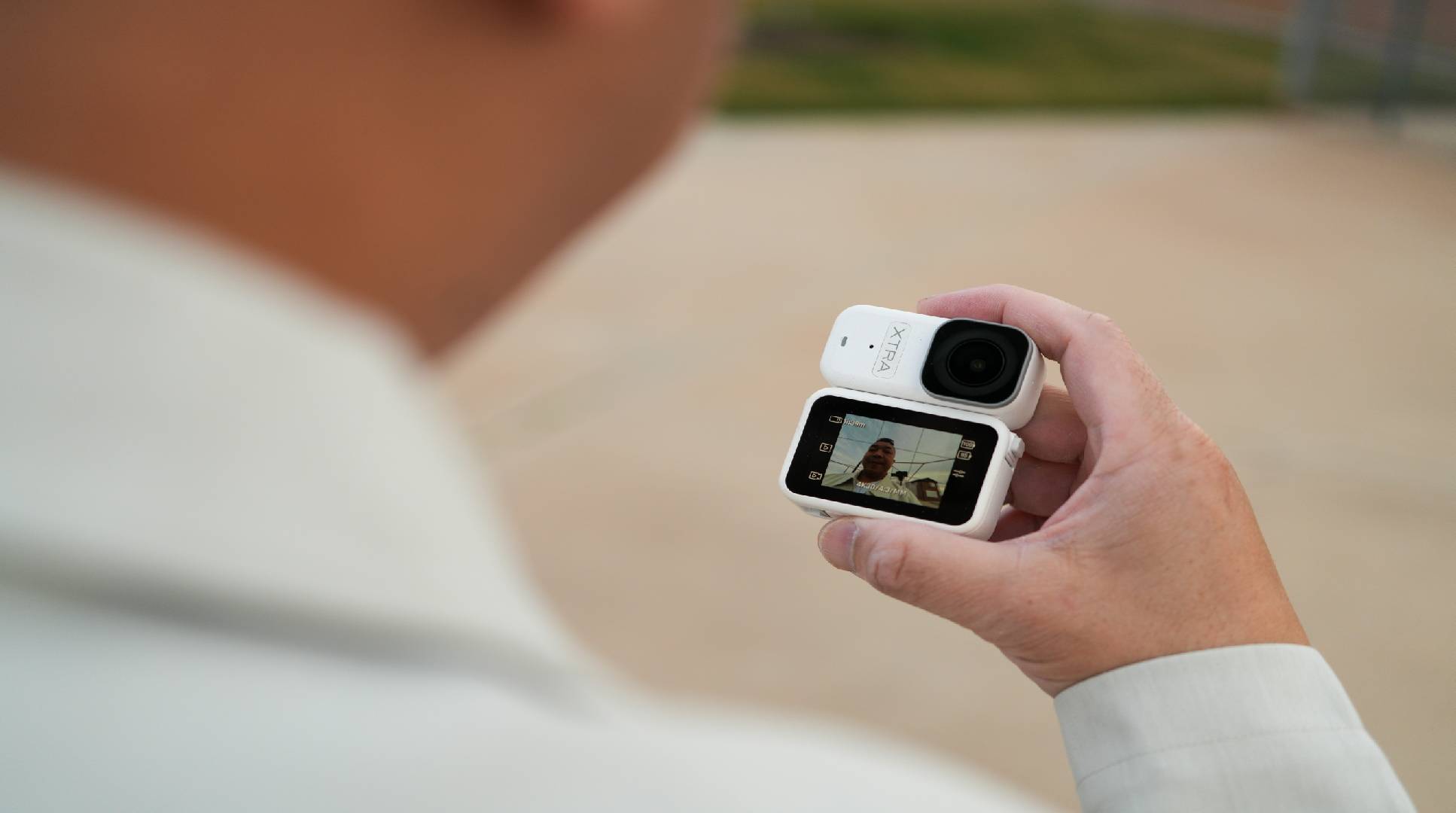
Xtra Atto is all about living in the moment. Weighing a mere 54g, this micro-camera is designed to be worn, not held. Using its magnetic quick-release ecosystem, you can clip it to your shirt, a backpack strap, or a hat, and completely forget it’s there.
• Why it wins the festival crowd: If you are navigating a dense crowd at Neon Carnival, you need your hands free. The Atto’s MotionMaster stabilization and TiltGuard horizon leveling keep your footage smooth even when you are jumping to the bass.
• The rugged advantage: Spilled drinks? Sudden rain? Pool parties? The Atto is completely waterproof up to 10m out of the box. Plus, with a massive 220-minute battery life, it will easily outlast the late-night after-parties.
Choose the ATTO if: You want a durable, "set-it-and-forget-it" camera that captures raw, immersive first-person perspectives while you stay fully engaged in the action.
XTRA MUSE: The Cinematic Pocket Gimbal
Best for: Solo creators, aesthetic travel vlogs, and perfectly framed storytelling.
If the Atto is your rugged action companion, the Muse is your personal pocket-sized film crew. The Xtra Muse takes the stabilization of a professional camera setup and shrinks it down into an elegant, everyday carry device featuring a built-in 3-axis mechanical gimbal.
• Why it wins for vloggers: While electronic stabilization is great, nothing beats the physical, buttery smoothness of a mechanical gimbal. Whether you are doing a "Get Ready With Me" in your hotel room or walking down a cobblestone street, the Muse delivers that polished, cinematic look.
• The solo creator's dream: The Muse features incredibly accurate smart tracking. Simply set it down, and the camera head will physically rotate to keep you perfectly centered in the frame. It’s the ultimate tool for capturing aesthetic b-roll of yourself without needing a friend to hold the camera.
Choose the MUSE if: Your priority is high-end cinematic smoothness, aesthetic vlogging, and smart tracking capabilities that allow you to film yourself flawlessly.
The Final Verdict
Still on the fence? Here is the easiest way to decide:
• If you want to wear it and jump into the chaos 👉 Go with XTRA ATTO.
• If you want to hold it and direct a cinematic vlog 👉 Go with XTRA MUSE.
Both cameras will instantly elevate your content and free you from the limitations of your phone. The only question is how you want to tell your story.
Find your best fit and upgrade your gear for the season.
Why Festival Content Deserves a Dedicated Camera
Music festivals have evolved into visual experiences. Between the stage lighting, the crowd energy, and the personal style on display, there is more happening visually at a modern festival than almost any other setting in everyday life. Yet most people rely on their smartphone to capture all of it, and the results are usually underwhelming: shaky footage, blown-out highlights from stage lights, and a phone battery that dies before the headliner takes the stage.
A dedicated camera solves these problems. It separates your memory-capturing tool from your communication device, so you never have to choose between filming a moment and responding to a text. It also delivers image quality that phones simply cannot match in challenging lighting conditions — the exact conditions you find at every outdoor festival after sunset.
XTRA MUSE was designed with this reality in mind. Its 1-inch CMOS sensor pulls in significantly more light than a phone camera sensor, which means cleaner, more vibrant footage in the neon glow and laser-lit darkness of a festival stage.
Tips for Getting the Best Results With XTRA MUSE
Even though XTRA MUSE is designed to be point-and-shoot simple, a few techniques can help you get dramatically better results from every session:
- Use Smart Tracking for solo shots. Set the MUSE on any flat surface — a cafe table, a windowsill, a rock — and activate Smart Tracking. The 3-axis gimbal will physically rotate to keep you in frame as you move. This is the single most powerful feature for solo creators who want cinematic footage without a camera operator.
- Shoot in 4K/120fps for social content. 120 frames per second gives you 5x slow motion when played back at 24fps. This is perfect for creating eye-catching social media clips — hair flips, dance moves, water splashes, and any fast-action moment that benefits from dramatic slowdown.
- Take advantage of the twist-to-open design. The MUSE powers on when you twist the body open and powers off when you close it. This means you can go from pocket to recording in under two seconds, which is critical for capturing spontaneous moments that disappear quickly.
- Record in vertical mode for TikTok and Reels. The MUSE's rotatable screen and gimbal allow native vertical shooting without cropping. This means full-resolution vertical content for social platforms — no black bars, no quality loss.
Technical Specifications That Matter
Understanding the technical capabilities of your camera helps you make better creative decisions. Here is what the key specifications mean in practical terms:
- 1-inch CMOS sensor: This sensor size is approximately four times larger than the sensor in a typical smartphone. More surface area means more light gathering capability, which directly results in cleaner images in low light, better color accuracy, and a more cinematic shallow depth of field that separates your subject from the background.
- 4K/120fps recording: 4K resolution provides four times the detail of 1080p. 120fps enables 5x slow motion. Together, these give you footage that holds up on large screens and social media alike, with the creative flexibility to slow down any moment for dramatic effect.
- 3-axis mechanical gimbal: Unlike digital stabilization, a physical gimbal uses motors and sensors to counteract camera shake in real time. This produces genuinely smooth footage without cropping the image or introducing compression artifacts. The difference is immediately visible, especially during walking shots, tracking movements, and any handheld recording situation.
- Smart Tracking with auto-framing: The gimbal can lock onto a subject and physically rotate the camera head to keep them centered in the frame. This is equivalent to having a dedicated camera operator, and it works reliably in most lighting conditions.
Real-World Festival Filming: What to Expect
Festival environments are uniquely challenging for cameras. Rapidly changing light — from bright sunlight to dark stages to neon and laser effects — pushes dynamic range to its limits. Crowds create constant jostling and vibration. Dust, sweat, and occasional rain or water spray demand durable construction. And the desire to stay fully present in the experience means your camera needs to work without constant attention.
A dedicated camera excels in all of these conditions. The larger sensor handles the extreme contrast between dark backgrounds and bright stage lights without blowing out highlights or crushing shadows. Mechanical stabilization produces smooth footage even when you are dancing, jumping, or pushing through a crowd. And because it is a separate device from your phone, you can record continuously for hours without worrying about draining the battery you need for navigation, communication, and mobile payments.
Most festival-goers who switch to a dedicated camera report the same thing: they enjoy the festival more. Not because the camera does anything magical, but because it removes the constant pull to frame, check, and re-frame through a phone screen. You set the camera, hit record, and go back to living in the moment.
Final Thoughts
The gap between phone footage and dedicated camera footage is not subtle — it is immediately visible to anyone watching your content. The XTRA MUSE brings a 1-inch sensor, mechanical gimbal stabilization, and 4K/120fps recording into a pocket-sized package that costs significantly less than cameras with comparable specifications.
Whether you are a seasoned content creator or someone who simply wants their memories to look better than what a phone can produce, XTRA MUSE is designed to meet you where you are and grow with you as your skills develop.
XTRA MUSE is available now at the XTRA Official Store with free shipping on orders over $99 and a 2-year warranty included.
Optimizing Your Festival Content for Social Media
Creating great festival footage is only half the equation — knowing how to package it for social media is what turns views into followers and followers into a community. Here are the strategies that top festival creators use consistently:
- Shoot vertical for TikTok and Reels, horizontal for YouTube. Vertical video now accounts for the majority of social media consumption. The 9:16 aspect ratio fills the entire phone screen, which increases watch time by 30-40% compared to letterboxed horizontal content. Plan your primary shots in vertical orientation, and grab horizontal clips specifically for YouTube Shorts and long-form content.
- Capture B-roll of the environment, not just the performers. The most engaging festival content is not just the main stage — it is the walk through the crowd, the food vendor lines, the art installations, the sunset over the festival grounds. These contextual shots are what make viewers feel like they are there with you, and they are essential for creating compelling edits.
- Use slow motion for the hero shots. Stage lighting combined with slow motion creates cinematic magic. A slow-motion shot of confetti falling through laser lights, or a crowd jumping in unison, gets shared dramatically more than real-time footage of the same moment.
- Edit on-location for same-day posting. Festival content has a 24-hour relevance window. The footage you post during the event gets exponentially more engagement than footage you post a week later. Carry a portable charger and use a simple mobile editing app to turn around content while the energy is still live.
The best festival creators treat their camera like a tool for storytelling, not just documentation. Every clip should answer the question: what did it feel like to be here? When your footage conveys that feeling, your audience grows organically.
What Sets XTRA MUSE Apart From Other Pocket Cameras
The pocket camera category has become crowded with options, but XTRA MUSE differentiates itself in several meaningful ways that matter to everyday creators:
- Integrated gimbal, not a separate accessory. Most pocket cameras require you to buy a separate gimbal for stabilized footage — an additional cost of $100-300 and an extra piece of equipment to carry. XTRA MUSE builds the gimbal directly into the camera body, which means stabilization is always available without any setup or additional cost.
- 1-inch sensor at this price point. The 1-inch CMOS sensor is the same sensor size used in premium compact cameras from Sony, Canon, and DJI that cost $700-1200. Having this sensor quality in a device under $400 represents exceptional value for creators who want professional image quality without professional pricing.
- Smart Tracking as a standard feature. AI-powered subject tracking is typically reserved for high-end cameras or requires a companion app. XTRA MUSE includes on-device Smart Tracking that works immediately, without any configuration, and tracks reliably in most real-world conditions.
- Vertical shooting without cropping. Most cameras shoot horizontally and require you to crop the footage for vertical social platforms, losing resolution in the process. XTRA MUSE shoots natively in both orientations, preserving full resolution for every platform.
These features combine to create a camera that genuinely replaces a phone for video content creation — not through marketing claims, but through practical capabilities that produce visibly better results from the very first recording.
Related Articles:

Leave a comment
This site is protected by hCaptcha and the hCaptcha Privacy Policy and Terms of Service apply.