

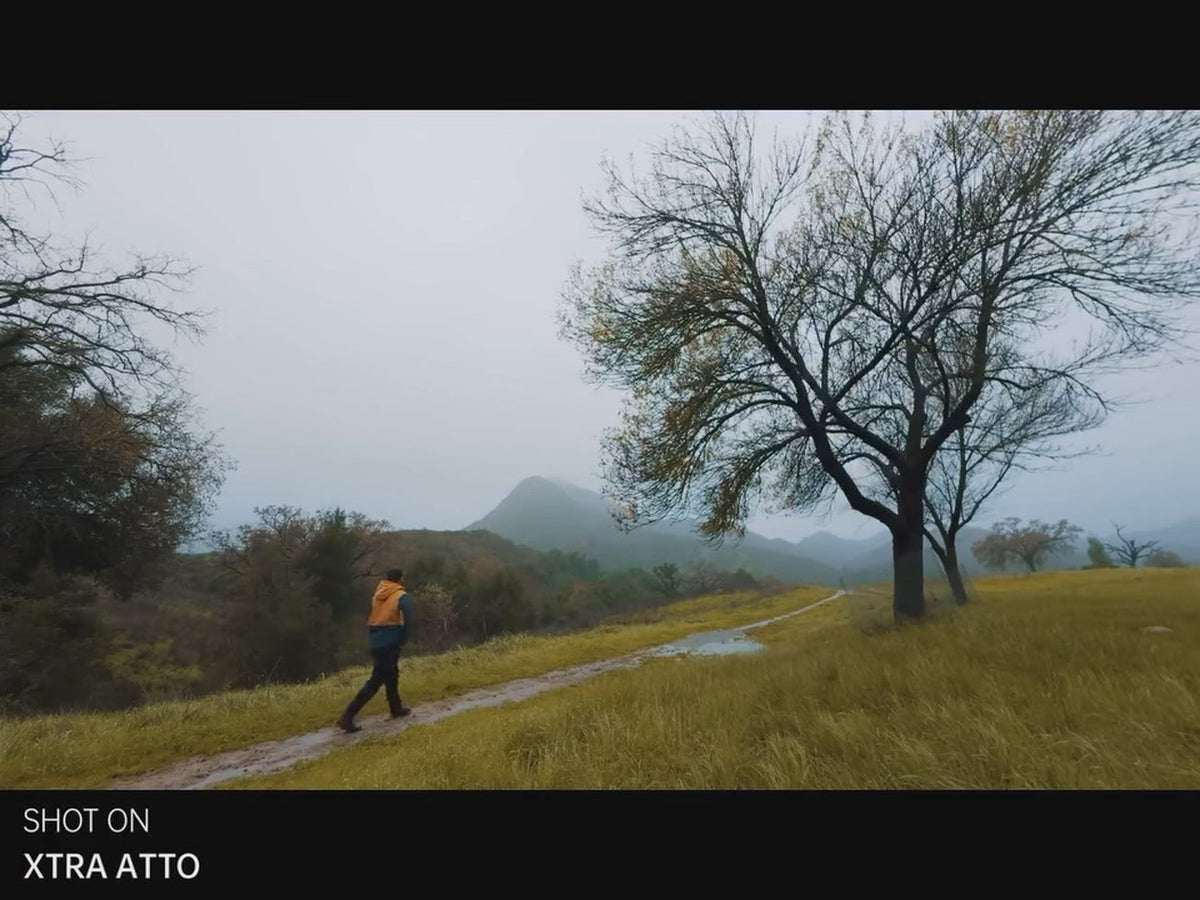
The best camera for hiking is not always the camera with the biggest sensor, the longest lens, or the highest specification on paper.
On the trail, every piece of gear has a cost.
Weight matters. Access matters. Battery matters. Weather matters. And sometimes the best moment happens while both of your hands are already busy.
That is why hiking changes the way you should think about a camera.
For many hikers, a lightweight wearable camera can be more practical than carrying a larger camera for every part of the trip.
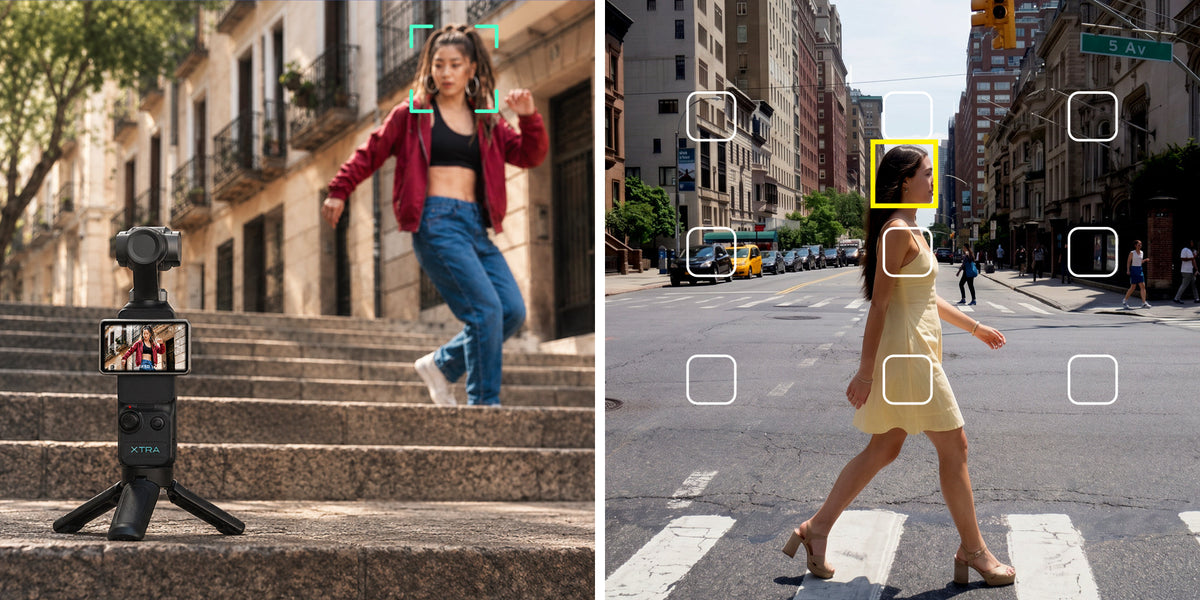
Xtra ATTO is one example of that approach: a 54g wearable 4K camera designed for hands-free POV recording, with magnetic mounting, stabilization, built-in storage, and extended battery support.
But before choosing any camera for hiking or backpacking, it helps to understand what actually matters on the trail.
1. Weight Matters More Than You Think
A camera that feels light at home can feel very different after several hours on a trail.
For hiking and backpacking, camera weight affects:
- Pack weight
- How often do you actually take the camera out
- How comfortable it feels to wear
- Whether you can keep it ready instead of packed away
This is especially important for a backpacking camera, where every gram competes with water, food, clothing, and safety gear.
ATTO's camera body weighs 54g, which makes it small enough to wear on a hat, chest, clothing, or compatible mount without carrying a traditional camera rig.
The goal is not simply to own the lightest camera possible.
It is to carry a camera that is light enough that you still want to use it after several hours outside.
2. Hands-Free Shooting Can Be More Useful Than a Bigger Camera
Hiking is not a stationary activity.
You may be climbing, using trekking poles, checking a map, carrying gear, or navigating uneven terrain.
That makes holding a camera continuously impractical.
A wearable camera changes the workflow.
Instead of stopping, pulling a camera from your bag, framing the shot, and putting it away again, you can capture short first-person moments while continuing the activity.
That can include:
- The trail ahead
- Your hands using trekking poles
- Crossing a stream
- Setting up camp
- Reaching a viewpoint
- Cooking outdoors
- Walking through changing terrain
For this kind of content, a POV camera for hiking can capture parts of the experience that are difficult to record with a handheld camera.
3. Stabilization Is Essential on the Trail
Walking footage moves constantly.
Every step changes the camera position, and uneven terrain makes that movement even more noticeable.
That is why stabilization should be high on the checklist when choosing an action camera for hiking.
ATTO uses MotionMaster stabilization together with TiltGuard horizon leveling to help manage movement during recording.
The important thing is not simply whether a product page says “stabilized.”
If hiking footage matters to you, look for real walking footage shot on:
- Flat trails
- Steep climbs
- Stairs
- Rocky terrain
- Faster movement
A real walking test is more useful than a stabilization label alone.
4. Battery Life Should Match the Way You Hike
Battery specifications can be confusing.
For wearable cameras, there is often a difference between:
camera-only runtime
and
total runtime with a dock or charging module.
ATTO's main camera is rated for up to 90 minutes, while total published runtime can reach up to 220 minutes with the Vision Dock.
Actual runtime varies with recording settings, temperature, and usage.
For hiking, the useful question is not:
“Can I record for three hours continuously?”
It is:
“Can I capture short clips throughout a long day without constantly worrying about charging?”
For many hikers, that camera-plus-dock workflow can be more practical than continuous recording.
5. Built-In Storage Reduces One More Thing to Manage
Storage is easy to ignore until you are far from your laptop.
ATTO provides approximately 107GB of usable built-in storage, allowing you to start recording without inserting a memory card.
For hiking and travel, this removes one more small item from the preparation checklist.
Footage records to the camera's internal storage and can later be exported through the Vision Dock to a microSD card when more space is needed.
For backpackers who want to reduce unnecessary gear and manage many short clips across a trip, the storage workflow matters almost as much as capacity.
6. Weather Resistance Matters Outdoors
Outdoor conditions change quickly.
Rain, splashes, mud, and water crossings are all part of hiking.
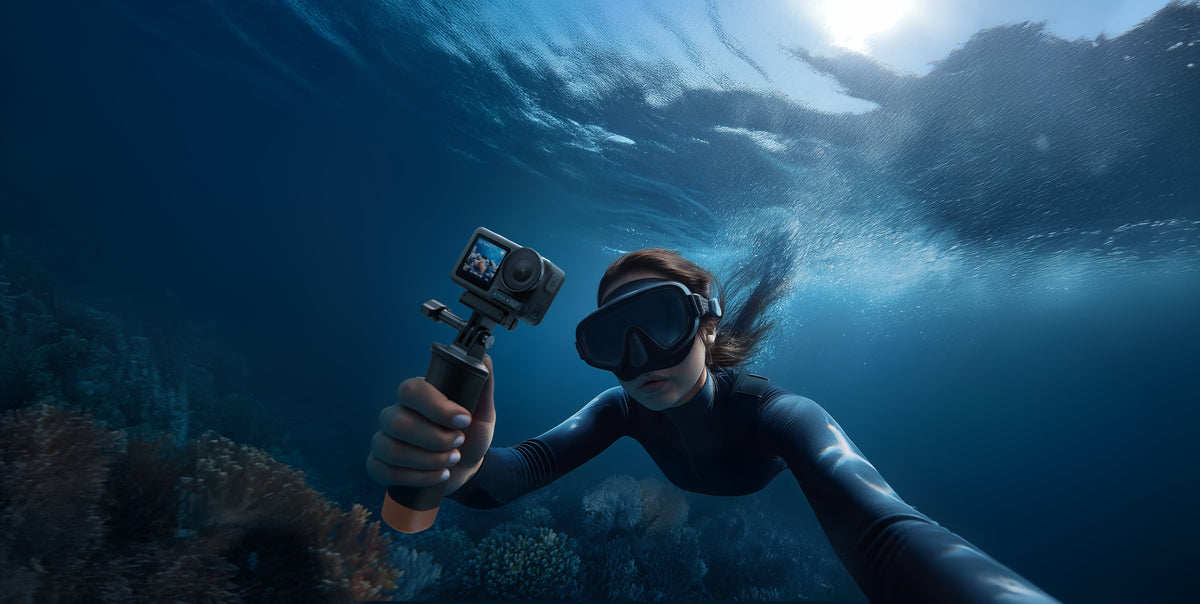
The standalone Xtra ATTO camera is waterproof to 10 meters without an additional case.
That can make it useful around rain, streams, beaches, or other wet environments.
The Vision Dock is different: it is not waterproof, and the connected system should only be treated as splash resistant.
When choosing the best camera for hiking, always check which part of the camera system is actually waterproof rather than relying on one headline rating.
7. Pre-Recording Helps With the Moments You Cannot Plan
Some trail moments happen too quickly to recreate.
Wildlife appears.
A bird takes off.
Someone reaches the summit.
A sudden view opens around a corner.
ATTO supports up to five minutes of pre-recording, helping preserve footage from before the record button is pressed when the feature is active.
For hiking, wildlife, fishing, or other outdoor activities, that can be more useful than simply recording everything continuously.
So, What Is the Best Camera for Hiking?
There is no universal answer.
A mirrorless camera may be better if your priority is landscape photography or interchangeable lenses.
A phone may be enough if you only want occasional snapshots.
A traditional action camera may work well for helmet or bike mounting.
A wearable camera becomes especially useful if you want:
- Lightweight gear
- Hands-free POV
- Frequent short video clips
- Stabilized walking footage
- Built-in storage
- Outdoor durability
- Less interruption while moving
That is where Xtra ATTO fits.
Its combination of a 54g body, 4K/60fps recording, stabilization, magnetic mounting, approximately 107GB of built-in storage, five-minute pre-recording, and extended battery support makes hiking and backpacking a natural use case.
The best hiking camera is not necessarily the one that captures the most technically perfect frame.
Sometimes it is the one that actually stays with you for the entire trail.

Leave a comment
This site is protected by hCaptcha and the hCaptcha Privacy Policy and Terms of Service apply.