
Everyday essentials

XTRA MUSE
The camera kit for handheld filming. Choose your own storage and accessories.
$329.00 USD $699.00
Your cart is empty
Continue shopping

XTRA MUSE COLLECTION
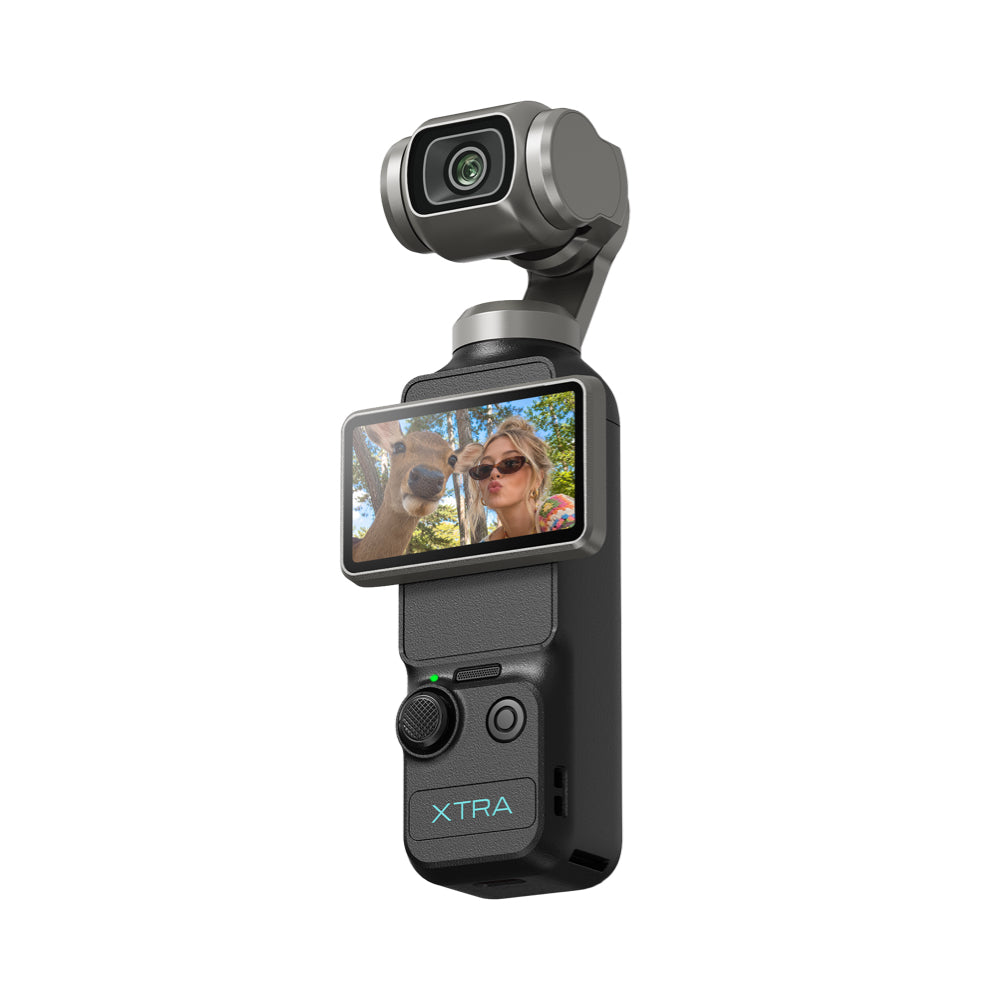
A pocket gimbal camera brings smooth, three-axis stabilization to a compact handheld design. Explore XTRA MUSE kits with a 1-inch sensor and up to 4K/120fps slow motion. Find your setup for everyday stories.
1-inch CMOS / 3-axis mechanical gimbal / 4K video
ONE CAMERA. YOUR CHOICE OF KIT.
The same MUSE camera in three configurations. Choose the camera on its own, add a Mini Tripod for supported shots, or pick a MicroSD Combo with storage included. Compare the accessories and choose what you need for your next shoot.
The camera kit for handheld filming. Choose your own storage and accessories.
$329.00 USD $699.00
Adds a Mini Tripod for supported shots and a flexible everyday setup.
$339.00 USD $728.00
Adds a microSD card to the MUSE camera kit for recording storage.
$419.00 USD $743.00
SMALL CAMERA. STEADIER STORIES.
A pocket gimbal camera combines an imaging sensor, lens, screen and motorized stabilizer in one handheld device. The gimbal physically adjusts the camera across three axes to help counter unwanted rotation as you move. That makes it a practical choice for walking tours, everyday video and talking to the camera.
Unlike a phone gimbal, it does not need your phone mounted in a separate stabilizer to record. Unlike an action camera, its main focus is smooth handheld movement, not rugged mounting or underwater capture. MUSE is not waterproof and should be protected from water and impacts.
It is a dedicated filming tool that leaves your phone free for other tasks. For a closer look at the trade-offs, read our smartphone and pocket gimbal comparison.
BUYING GUIDE
Start with what you film and how you carry your kit. These four considerations help you compare a handheld gimbal camera with the gear you already use.
A three-axis mechanical gimbal moves the lens assembly to smooth rotation. Electronic stabilization processes the recorded image instead. Consider walking footage, framing and mounting needs rather than choosing on the label alone.
MUSE pairs a 1-inch CMOS sensor with 4K recording and up to 4K/120fps slow motion. Check lighting, frame rate and recording mode together: a high frame rate is useful for slowing down fast-moving moments.
Look at grip comfort, screen visibility and how quickly you can switch between filming yourself and your surroundings. A pocket gimbal camera should fit your routine without making each recording feel like a setup session.
Compare battery test conditions, not just headline runtime. Plan charging, storage and sound for longer outings. Check microphone compatibility before buying accessories; MUSE supports compatible digital USB-C audio or a suitable 3.5 mm microphone adapter.
CHOOSE THE RIGHT TOOL
There is no single best setup for every shoot. A dedicated camera offers an integrated recording experience; a phone gimbal builds on your phone; an action camera prioritizes mounted and outdoor use. Features vary by model, so check the specifications of the equipment you are comparing.
| What matters | Pocket gimbal camera | Phone gimbal | Action camera |
|---|---|---|---|
| Recording setup | Camera and gimbal in one device | Uses your mounted smartphone | Self-contained camera |
| Stabilization | Motorized three-axis gimbal | Motorized support for a phone | Typically electronic; model dependent |
| Best suited to | Walking videos and handheld stories | Creators who prefer phone recording | Mounted POV and outdoor action |
| What to consider | Protect the moving gimbal; MUSE is not waterproof | Phone compatibility, balance and bulk | Waterproof limits, mounts and stabilization modes |
TAKE YOUR STORIES FURTHER

Take a compact camera along for city walks, food stops and the moments between destinations. A pocket gimbal camera makes it easier to move from a wide view to a personal story without mounting your phone. Keep the gimbal protected when packing, and plan storage and charging for longer days.

Use MUSE for everyday updates, travel diaries and talking-to-camera videos. Its integrated screen helps you check framing as you film. Choose the Mini Tripod Combo when supported recording is part of your routine, and compare audio options before building a kit for interviews or noisy locations.

Show a place from your own perspective with handheld walking footage and close observations. Smooth camera movement can help connect a sequence, but careful framing still matters. For wet, high-impact or helmet-mounted action, consider whether an action camera is a better tool than a handheld gimbal camera.
BEFORE YOU CHOOSE
It is a compact camera with a built-in motorized gimbal. The stabilizer physically adjusts the camera across three axes to help reduce unwanted rotation during handheld filming. It records independently rather than relying on a mounted smartphone.
A phone gimbal stabilizes your smartphone, which supplies the lens, sensor and recording app. A pocket gimbal camera integrates those recording components and the stabilizer into one device, so your phone is not needed as the mounted camera.
Choose for the scene. Mechanical stabilization suits controlled handheld movement and walking shots. Electronic stabilization is common in action cameras designed for mounted use. Neither removes every kind of motion, and results depend on shooting conditions and technique.
Yes, depending on the model. XTRA MUSE records 4K video and supports up to 4K/120fps in slow-motion mode. Check the recording mode and frame-rate settings before filming; maximum frame rate is not available in every mode.
Yes. XTRA MUSE combines a 1-inch CMOS sensor, a built-in three-axis mechanical gimbal and a screen in a compact handheld camera. The kits above use the same camera with different accessory combinations.
MUSE is rated for up to 161 minutes under test conditions: 25 degrees Celsius, 1080p/24fps recording, Wi-Fi off and screen off. Actual runtime varies with settings, temperature and use. Higher recording demands and screen use can reduce runtime.
Yes. A handheld gimbal camera can suit walking videos, travel stories and talking-to-camera content. Consider framing, lighting and audio alongside resolution. Choose accessories for your recording style rather than assuming every creator needs the same kit.
Compare the camera, included accessories, storage needs and compatible audio options within your total budget. Check current kit prices above and the product page for availability. The best choice depends on how you film, not simply the largest bundle.
KEEP EXPLORING

