

A phone or handheld camera is great when you have time to stop, frame the shot, and press record.
But not every moment works that way.
Sometimes you are cooking with both hands. Riding a bike. Hiking with trekking poles. Playing with your dog. Setting up camp. Building something. Carrying a child.
In those situations, the question is not simple:
“Which camera has better specs?”
It is:
“Can I keep doing what I’m doing while the camera records?”
That is where a wearable camera starts to make sense.
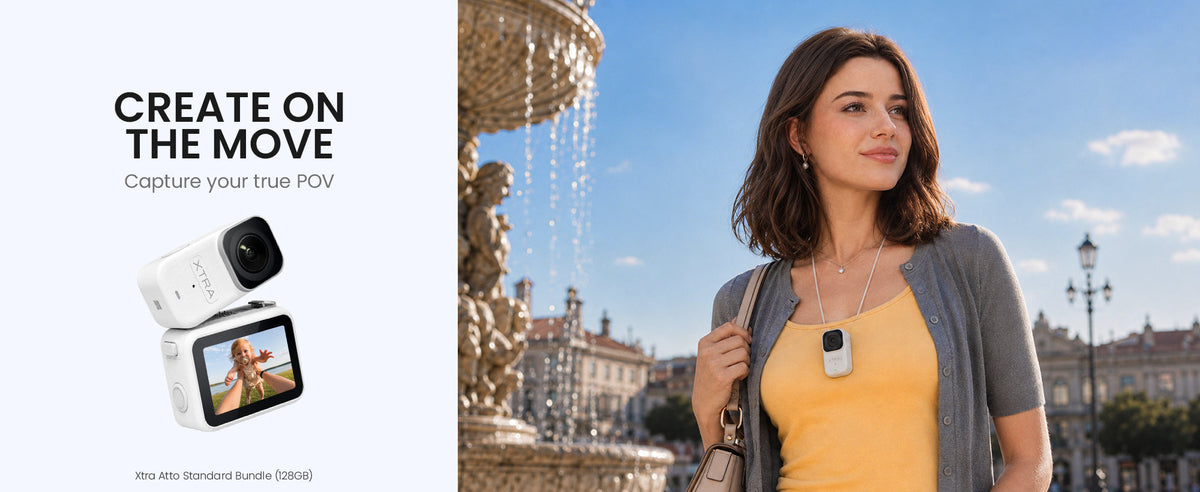
Instead of replacing your phone or traditional camera, a wearable camera adds another way to capture life: hands-free, first-person, and from inside the activity.
What Is the Real Difference?
The biggest difference between a wearable camera and a handheld camera is not resolution.
It is the shooting workflow.
|
Handheld Camera / Phone
|
Wearable Camera
|
|
Usually occupies one hand
|
Can record hands-free
|
|
You stop and frame the shot
|
Can record while you stay active
|
|
Often shows the activity from outside
|
Can capture first-person POV
|
|
Easy for intentional compositions
|
Useful for spontaneous moments
|
|
Best when you control the shot
|
Useful when the moment controls you
|
Neither approach is automatically better.
They simply solve different problems.
1. When Both Hands Are Busy
This is probably the clearest reason to use a wearable camera.
Think about activities such as:
- Cooking
- Fishing
- DIY
- Crafts
- Pet interaction
- Cycling
- Fitness
- Setting up outdoor gear
A phone can record all of them.
But once one hand is holding the phone, the activity itself often changes.
A chest-mounted wearable camera lets both hands stay visible and involved.
For example, instead of filming your dog with one hand while giving treats with the other, you can keep both hands in the interaction while the camera records your point of view.
That is not simply a different camera angle.
It is a different way of filming the moment.
2. When Stopping to Film Would Break the Experience
Some moments are easy to recreate.
Others are not.
During a hike, you may not want to stop every few minutes to take out your phone.
During a bike ride, stopping to film changes the ride entirely.
During family time, constantly moving behind a screen can make the moment feel more like a production than everyday life.
A lightweight wearable camera can stay ready while you keep moving.
That makes it particularly useful for:
Hiking → Cycling → Travel → Family → Pets → Outdoor activities
The camera becomes less of an object you repeatedly pick up and more of something that can stay with the experience.
3. When First-Person Perspective Is Part of the Story
A handheld camera usually shows what happened outside.
A wearable POV camera can show what the moment looked like from where you were.
That difference matters.
Chest POV can show your hands preparing food, working on a project, or interacting with a pet.
Hat POV can show the trail or environment ahead.
A low or fixed POV can reveal an angle that would be awkward to hold with a phone.
This is why wearable cameras are increasingly useful not only for action footage, but also for vlogging, pets, family, travel, DIY, and everyday storytelling.
Sometimes the perspective itself is the content.
4. When the Moment Happens Before You Are Ready
Phones work well when you know what you want to film.
But everyday life does not always wait.
A pet suddenly reacts.
Wildlife appears on the trail.
A fish bites.
Someone does something funny.
You reach for the camera—and the best part has already happened.
Features such as pre-recording can help with this kind of situation.
Xtra ATTO, for example, supports up to five minutes of pre-recording, allowing footage from before the record command to be preserved when the feature is active.
This does not mean you should record everything all day.
It simply gives spontaneous moments a little more room to happen naturally.
When a Handheld Camera Still Makes More Sense
Hands-free is useful, but it is not the answer to every shot.
A phone, compact camera, or mirrorless camera may still be better when you want:
- Carefully controlled framing
- Long talking-to-camera segments
- Portraits
- Zoom
- Interchangeable lenses
- Cinematic depth of field
- Detailed manual controls
- More deliberate compositions
For many creators, the best setup is not:
wearable camera OR handheld camera
but:
wearable camera + handheld camera
Use the handheld camera when you want to control the frame.
Use the wearable camera when you want to stay inside the moment.
Where Xtra ATTO Fits
Xtra ATTO is built around that second type of shooting.
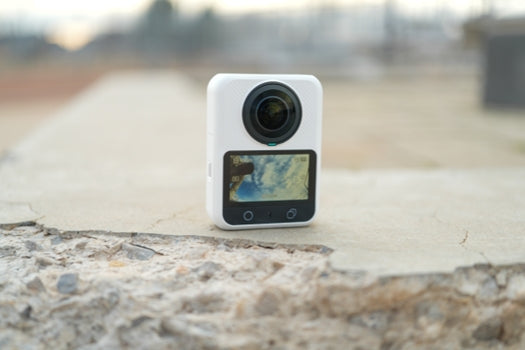
Its 54g wearable body can be magnetically mounted for hands-free recording, while 4K/60fps capture, stabilization, built-in storage, and five-minute pre-recording support frequent first-person filming.
The most important part is not any one specification.
It is how those features work together when the camera is actually being worn.
For example:
Cooking → chest POV while both hands prepare food
Hiking → hat or chest POV while moving along the trail
Pet interaction → both hands stay with the pet
Fishing → the camera keeps recording while your hands handle the gear
DIY → viewers see the work from your perspective
That is the real use case for a wearable camera.
Should You Choose a Wearable Camera?
Ask yourself one simple question:
Does holding the camera get in the way of what I want to record?
If the answer is no, your phone or current camera may already be enough.
If the answer is often yes, a wearable camera starts to become much more useful.
The value is not simply that it is smaller.
It is that filming no longer has to mean stepping away from the activity.
Sometimes the most interesting footage happens when you stop holding the camera—and start living inside the frame.

Leave a comment
This site is protected by hCaptcha and the hCaptcha Privacy Policy and Terms of Service apply.