

On a professional video set, the A-cam is sacred. It protects the essential shot: the interview, the scripted action, or the hero composition. The B-cam, however, is your storytelling engine—providing alternate angles, contextual cutaways, and dynamic moving B-roll.
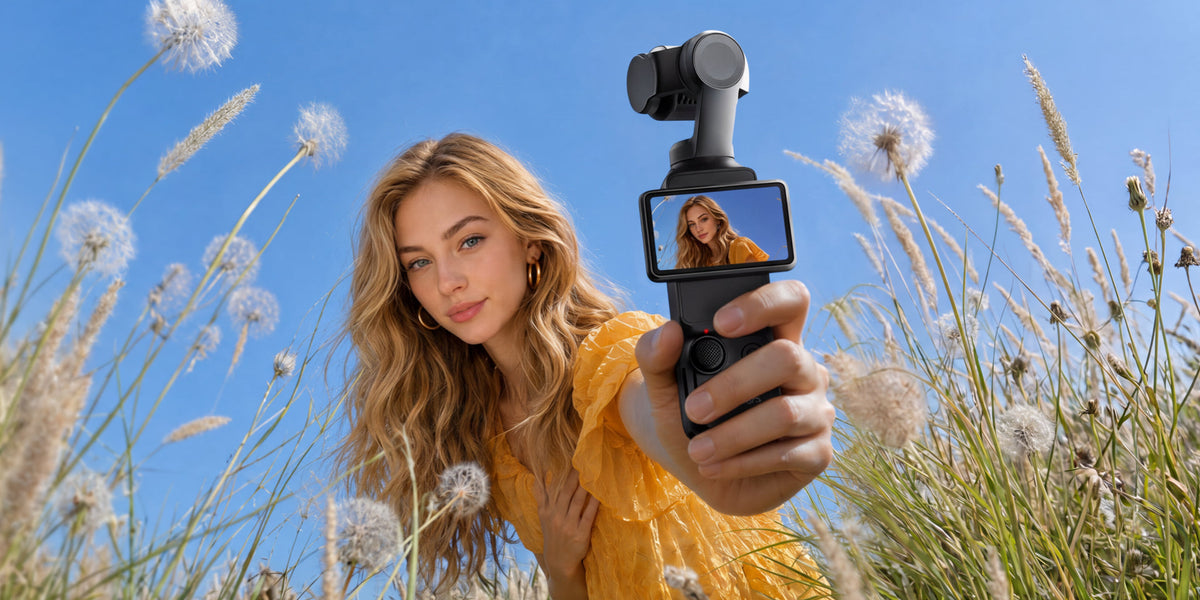
But the best second camera isn't always another massive cinema rig. Sometimes, it’s the camera that can get the shot before the moment disappears. That is exactly why a pocket gimbal camera B-cam has become a secret weapon for modern videographers. Combining a tiny physical footprint with mechanical stabilization, devices like the XTRA MUSE allow you to grab rapid, high-quality inserts while your main camera remains untouched.
Here is why a compact gimbal camera belongs in your professional kit.
The Quick Take
A professional B-camera should add coverage, not complexity. The XTRA MUSE delivers true 3-axis mechanical stabilization, a 1-inch CMOS sensor, 10-bit X-Log, and 4K/120fps in a device that weighs just 180g. It is the ultimate tool for fast-paced, run-and-gun B-roll without the overhead of balancing a traditional heavy gimbal.
7 Reasons Pocket Gimbal Cameras Earn a Place on Set
1. The A-Cam Stays Locked and Loaded
Reconfiguring a main camera costs time. Moving your A-cam from a tripod interview setup to a heavy gimbal, balancing the rig, and then rebuilding the original shot can introduce massive delays. A pocket gimbal camera acts as a dedicated movement tool. While the A-cam protects the speaker, a second operator can seamlessly gather B-roll—like hands at work or environmental transitions—keeping the production moving fast.
2. Mechanical Stabilization for Instant Movement
The XTRA MUSE uses a true 3-axis mechanical gimbal. This physical stabilization supports walking shots, lateral reveals, and tracking details without the need for a separate, heavy handheld gimbal system. It allows you to move through tight spaces where a larger rig would be intrusive or physically impossible to operate.
3. Micro-Size Opens Up Impossible Angles
At just 180g, the MUSE is a stabilized B-roll camera that offers perspectives traditional rigs can’t touch. Whether you need to shoot inside a cramped vehicle interior, get ground-level details, or capture tabletop product orbits, a small camera minimizes disruption on set. Plus, the built-in 1/4"-20 mount ensures it plays nicely with your existing grip gear.
4. High Frame Rates for Editorial Texture
Need to slow things down? The XTRA MUSE records 4K/60fps, 4K/120fps, and 1080p at 240fps. A dedicated B-cam allows you to reserve these high-frame-rate options for specific, impactful details—like pouring liquid, fabric movement, or athletic motion—adding instant cinematic texture to your edit.
5. It Protects the Main Build
Your A-cam is likely rigged with specific heavy lenses, matte boxes, wireless video transmitters, and timecode syncs. Keeping that build intact reduces points of failure. The pocket camera becomes your "grab-the-insert" tool without forcing changes to the production’s central configuration.
6. Built for Grading: 10-Bit X-Log
A second camera for videography must be able to match your primary footage. The XTRA MUSE provides both Rec.709 (for fast turnaround) and 10-bit X-Log. For colorists and post-production teams, X-Log offers the dynamic range and flexibility needed to match the pocket camera's footage seamlessly with heavier cinema cameras.
7. Unbeatable Cost-to-Coverage Ratio
With a starting price of just $329, the XTRA MUSE offers an exceptional ROI. A B-cam purchase should be judged by the coverage it enables and the time it saves on set.
How to Integrate a Pocket B-Cam Professionally
To make the most of an XTRA MUSE professional workflow, treat it with the same discipline as your A-cam:
- Test Before the Shoot: Record the same scene with your A-cam and pocket camera. Run both files through your intended post-pipeline to establish a baseline for exposure, white balance, and color conversion.
- Assign Specific Shots: Don't just shoot random B-roll. Add specific notes like "gimbal detail" or "low moving reveal" to your shot list.
- Protect Data Discipline: Treat small-camera footage with care. Use clear folder naming and follow the production’s backup policy. A small file from a small camera is just as important when it contains an unrepeatable moment.
XTRA MUSE as a B-Cam: Pros & Cons
The Pros:
- True 3-axis mechanical gimbal in a tiny integrated design.
- Massive 1-inch CMOS sensor for excellent depth and low-light performance.
- Pro video specs: 4K/120fps and 10-bit X-Log.
- Ultra-lightweight (180g) with a built-in 1/4"-20 mount.
The Cons:
- Fixed integrated system (no interchangeable lenses).
- Color matching with cinema cameras requires testing and grading knowledge.
FAQ
What is a B-cam in professional video production?
A B-cam is a secondary camera used to capture alternate angles, cutaways, specialized movement, or backup coverage, complementing the primary A-cam’s footage.
Can the XTRA MUSE match a cinema camera?
Matching always depends on lighting, settings, and the specific A-cam used. However, because the XTRA MUSE offers a 1-inch sensor and records in 10-bit X-Log, colorists have the necessary data and flexibility to match it closely with professional cinema systems in post-production.
Why not just put the main camera on a gimbal?
Putting an A-cam on a gimbal takes time to balance and re-rig, which slows down production. A pocket gimbal camera is ready instantly, allowing you to grab supplementary movement quickly while the main camera remains locked off for the hero shots.
👉 [Get the XTRA MUSE 4K Pocket Gimbal with Limited-Time Creator Bundles]



Leave a comment
This site is protected by hCaptcha and the hCaptcha Privacy Policy and Terms of Service apply.