
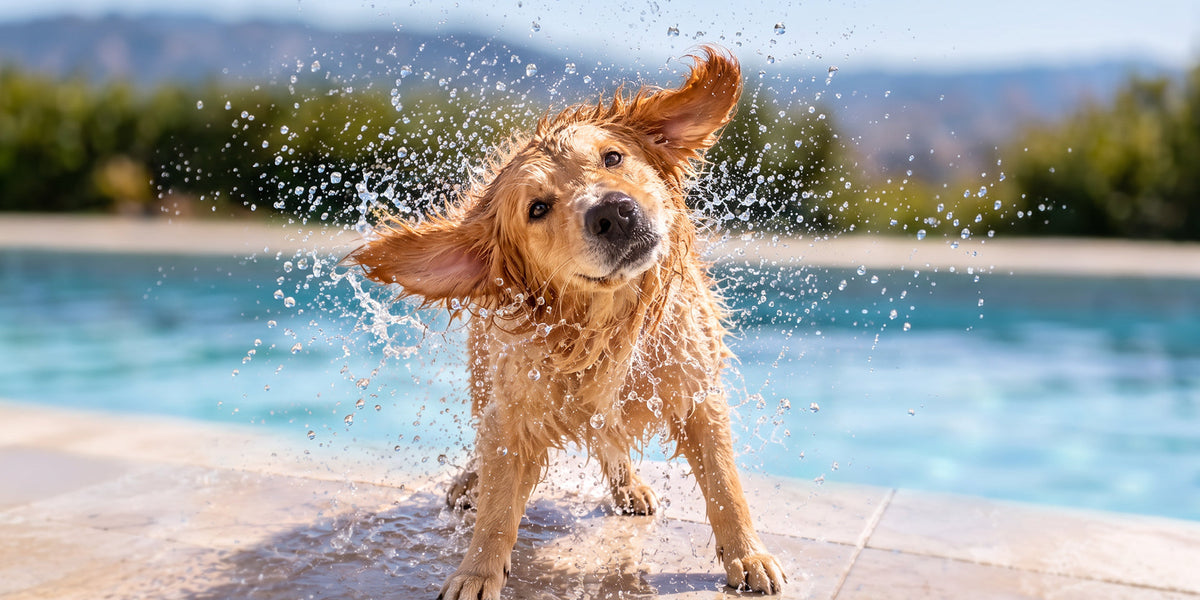
Your phone is probably already the camera you use most for pet videos.
It is always nearby, easy to share from, and perfectly capable of capturing everyday moments.
But filming with a phone changes the interaction.
One hand becomes the camera hand.
You step back to frame the shot.
And most footage is captured from human height, looking down at the pet.
A pet POV camera changes that workflow.
Instead of asking your pet to fit around the filming, a small wearable camera can stay with you while you keep playing, feeding, walking, grooming, or simply spending time together.
The difference is not only what the camera records.
It is how much filming interrupts the moment.
Phone vs Pet POV Camera: The Real Difference
A phone and a wearable POV camera can both record pet videos.
The more useful comparison is not:
Which one has better specs?
It is:
Which one lets you capture the kind of moment you want?
|
Phone
|
Wearable Pet POV Camera
|
|
Usually occupies one hand
|
Can record hands-free
|
|
Often shoots from human height
|
Can capture chest, low, or pet-eye-level POV
|
|
Easy for intentional clips
|
Useful for spontaneous interactions
|
|
Great for framing and sharing
|
Useful when you want to stay inside the activity
|
Neither replaces the other.
They simply create different kinds of footage.
1. Hands-Free Means You Stay in the Interaction
Think about how you normally film your dog or cat.
If you are using a phone, one hand is usually holding the screen.
That can make simple interactions harder to capture naturally:
- Giving treats with both hands
- Playing with a toy
- Brushing
- Training
- Putting on a leash or harness
- Opening a new toy
- Cuddling
- Playing with a cat wand
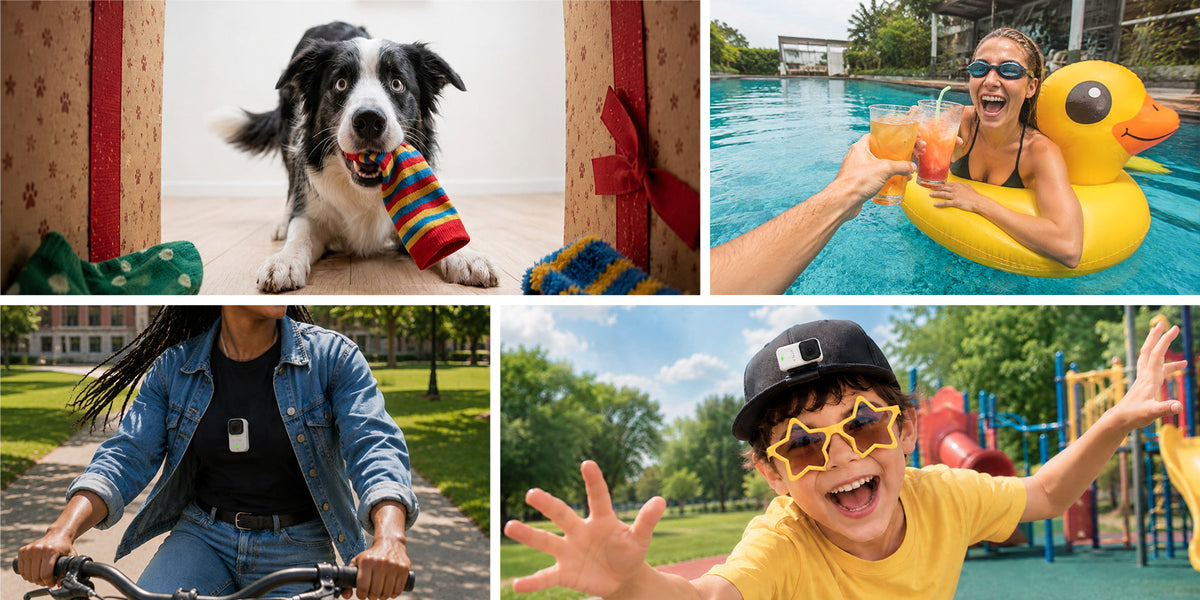
A chest-mounted pet POV camera changes the setup.
The camera records while both hands remain with the pet.
That often makes the footage feel less like:
“I am filming my pet.”
and more like:
“You are here with us.”
That is one of the strongest reasons wearable POV works well for everyday pet content.
2. Pet POV Is About Getting Closer to Their World
Most pet videos are filmed from above because that is where humans naturally stand.
But some of the most memorable pet footage happens much lower.
Think about:
- A dog running toward the lens
- A cat walking past at floor level
- A nose coming close to the camera
- Whiskers filling the frame
- A paw reaching forward
- A pet approaching its bowl
- A toy chase from ground level
These angles can make an ordinary moment feel completely different.
A phone can also be placed low, of course.
The challenge is staying in the interaction while holding or positioning it.
A small pet POV camera makes it easier to experiment with floor-level and close perspectives while keeping the filming setup less intrusive.
The goal is not to make the pet perform for the camera.
It is to let the camera fit into what the pet is already doing.
3. Chest POV and Low POV Tell Different Stories
For pet videos, two angles are especially useful.
Chest POV
Best when your interaction is the story.
Examples:
- Giving treats
- Walking the dog
- Playing
- Grooming
- Training
- Cuddling
The viewer sees your hands and the pet reacting to you.
Low or Pet-Eye-Level POV
Best when the pet's world is the story.
Examples:
- Running
- Exploring
- Sniffing
- Playing with toys
- Moving through the home
- Approaching the camera
These two angles work well together.
A short pet Reel might begin with a low-angle run toward the lens, then reveal the chest-mounted setup showing both hands in playtime.
That creates both:
interaction + perspective.
4. Spontaneous Pet Moments Are Hard to Time
Pets are unpredictable.
A sudden zoomie, jump, greeting, funny reaction, or quick interaction can happen before you even reach for your phone.
That is where pre-recording can help.
Xtra ATTO supports up to five minutes of pre-recording, allowing footage from before the record command to be preserved when the feature is active.
For pet owners, that can be useful when you know something might happen—but not exactly when.
The point is not to record your pet continuously.
It is to reduce the chance that the most interesting part happened two seconds before you pressed record.
5. Where Xtra ATTO Fits
Xtra ATTO is designed around this kind of hands-free pet POV workflow.
Its 54g camera body can be worn magnetically on clothing for owner POV, while its compact size also makes it useful for safe, supervised low-angle placement.
For pet content, the most relevant features are:
- 54g wearable body
- Magnetic hands-free mounting
- 4K/60fps recording
- Up to 5-minute pre-recording
- Chest-level and low-angle POV flexibility
- Stabilization for movement
You do not need to use every feature in one video.
A stronger pet story usually starts with one real moment and one useful perspective.
Pet Safety Comes Before the Shot
Creative POV should never come at the expense of the animal.
For low or fixed camera placement:
- Keep the camera stable
- Supervise the setup
- Do not block normal movement
- Keep it away from food and water unless the placement is clearly safe
- Stop if the pet appears stressed
- Do not encourage chewing, pawing, or forced interaction
The best pet footage feels natural because the pet is behaving naturally.
So, is a Pet POV Camera Better Than a Phone?
Not always.
A phone is still excellent for quick portraits, intentional clips, and easy sharing.
A wearable POV camera solves a different problem.
It becomes useful when you want to:
- Keep both hands with your pet
- Capture interaction from inside the moment
- Film from lower or more unusual perspectives
- Record spontaneous behavior
- Make everyday pet footage feel more immersive
That is the real difference.
A phone can show your pet.
A pet POV camera can help viewers feel closer to the way you experience life with them.

Leave a comment
This site is protected by hCaptcha and the hCaptcha Privacy Policy and Terms of Service apply.